Abstract Software
Session Builder and Scheduling


.svg)





As a grantmaker, you know how essential grants are for helping mission-driven organizations and individuals fulfill their goals. However, your role goes far beyond combing through your applications and deciding which organizations to disburse grants to.
The process that follows—managing your disbursement, tracking how the funds are used, and analyzing the impact of the funds—ensures your foundation, association, or higher education institution’s efforts yield meaningful results. This guide will walk you through grant management from the perspective of grantmaking organizations by covering the following topics:
When your team handles grant management responsibly and effectively, grantees also benefit from more timely payments, streamlined reporting, and a stronger bond with your organization. Let’s start by answering a few frequently asked questions about grant management.

Grant management refers to the process by which grantmaking organizations oversee all activities related to a grant. It encompasses all tasks required to ensure that funds are distributed responsibly and effectively to grantees, enabling them to make a greater impact on their communities.
The grant management process is typically broken into three stages: pre-award, award, and post-award. Activities that occur during these phases include creating and promoting grant applications, reviewing submissions, disbursing grant funds, and analyzing the impact of funding.
Grant management and awards management are often confused, but while they share many overlapping processes, they refer to two different concepts:
In short, some grants or grant funds are also awards, but this is not always the case. Grant management concerns philanthropic investments aimed at advancing an ongoing mission or future project, whereas awards management involves administering and overseeing awards as recognition for past achievements.
While grantmakers and grant recipients must both go through the grant management process, it looks different for both. Here is what each stage looks like for these groups:
| Grantmakers | Grant Recipients | |
| Pre-Award | Designate the funds for the grant, create application forms, and promote the grant opportunity to potential applicants | Identify funders whose mission aligns with theirs, fill out applications and write proposals, and prepare supplementary documents that persuade the funder to choose them |
| Award | Review applications, determine who receives the grant, draft a contract, and disburse funds | Review contact terms, set up internal accounting systems to record restricted funds, and assign staff members to the grant project |
| Post-Award | Check in with the grant recipient to ensure the project is on track, compare any reports received with the original grant proposal, and close out the grant management process once the grantee has achieved their goals | Execute the grant project, track funding usage and impact, aggregate findings, and present data or progress summaries to the grantmaker through reports |
Grantmakers and grant recipients may also require different software solutions to support them throughout the process, as most tools are made for one group or the other. Before investing in a grant management tool for your organization, ensure it’s designed for grantmakers, not grantees.
Generally, grant management benefits grantmaking organizations by:
Grant management also comes with specific positive outcomes for certain types of grantmaking organizations:
Applicants also benefit across the board when the grant management process is streamlined, as they’ll be working with a more knowledgeable and organized grantmaker who can provide them with the necessary structure to demonstrate how grant funding has been used. In turn, more grant seekers will want to work with that specific grantmaker, which increases the popularity of their grant opportunities.
Although grant management is an essential process of grantmaking, that doesn’t mean that it’s without challenges. Here are the most common funder pain points in grant management:
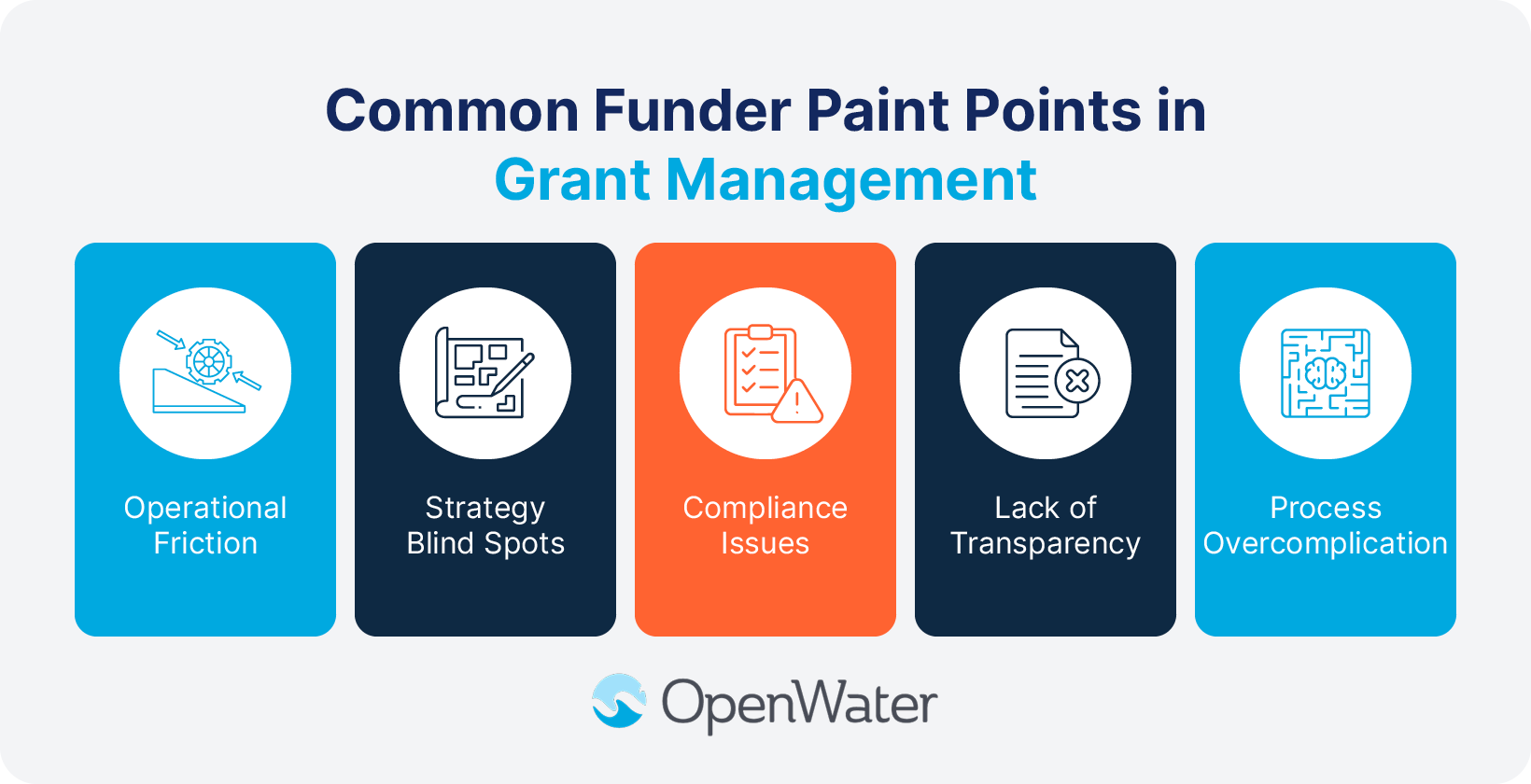
Fortunately, there are ways to mitigate these pain points. One of the best ways is by investing in grant management software that makes it easy to manage funding opportunities with streamlined applications, user-friendly review portals, and other key features.
Grant management is a continuous process that starts the moment you decide to create a grant opportunity and ends once your grant recipient has accomplished what they’ve laid out in your proposal. Here are the different stages of the grant management lifecycle for grantmakers:
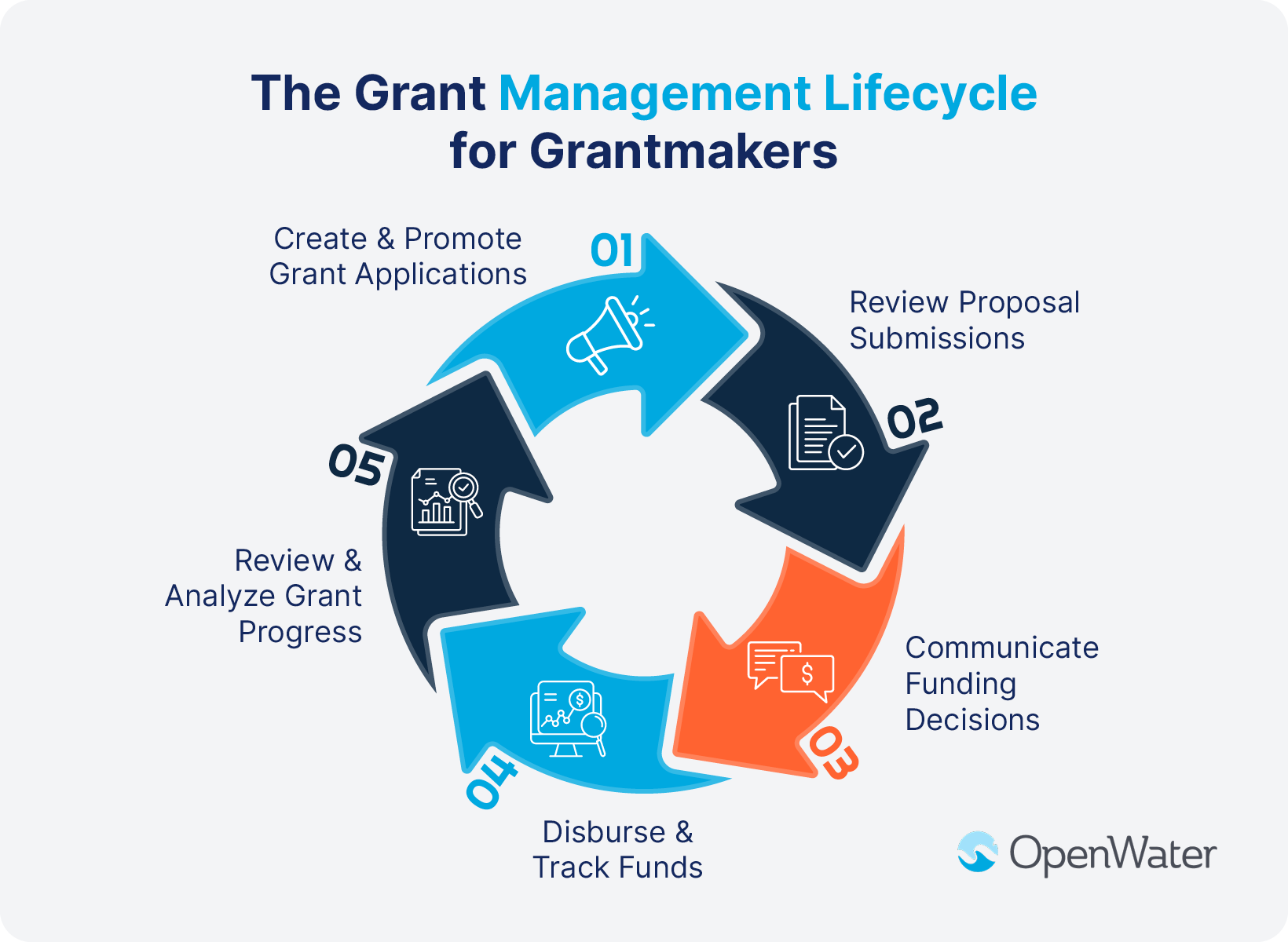
Grant application forms are among the main documents grantmakers like you evaluate to determine whether an organization or individual should receive your grant funds. Ensure that you get the information you need from these forms by asking applicants to provide you with the following details:
You may also want to request additional documents verifying the organization’s tax-exempt status, listing the board of directors, and providing its most recent financial statements.
Once you’ve finalized your grant application forms, begin promoting the opportunity through the following channels:
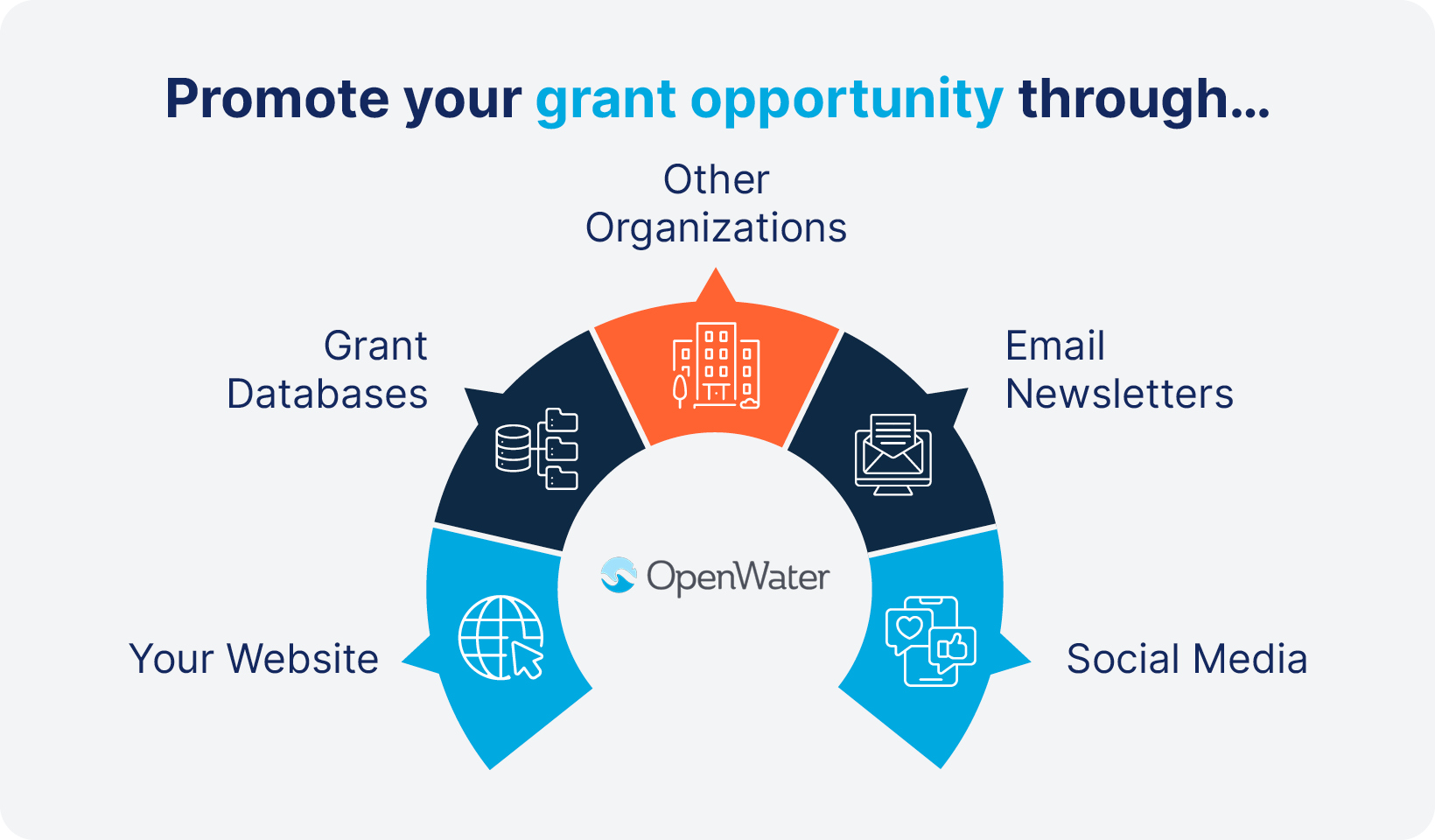
During the open application period, you may also want to assign staff members to answer any incoming questions about your grant opportunity or guidelines, as applicants will inevitably want to ask you about the specific details of your grant or what you require from them.
After your application period is closed, it’s time to review proposal submissions and decide which applicants will receive your grant. Ideally, you should follow a multi-round review process that looks something like this:
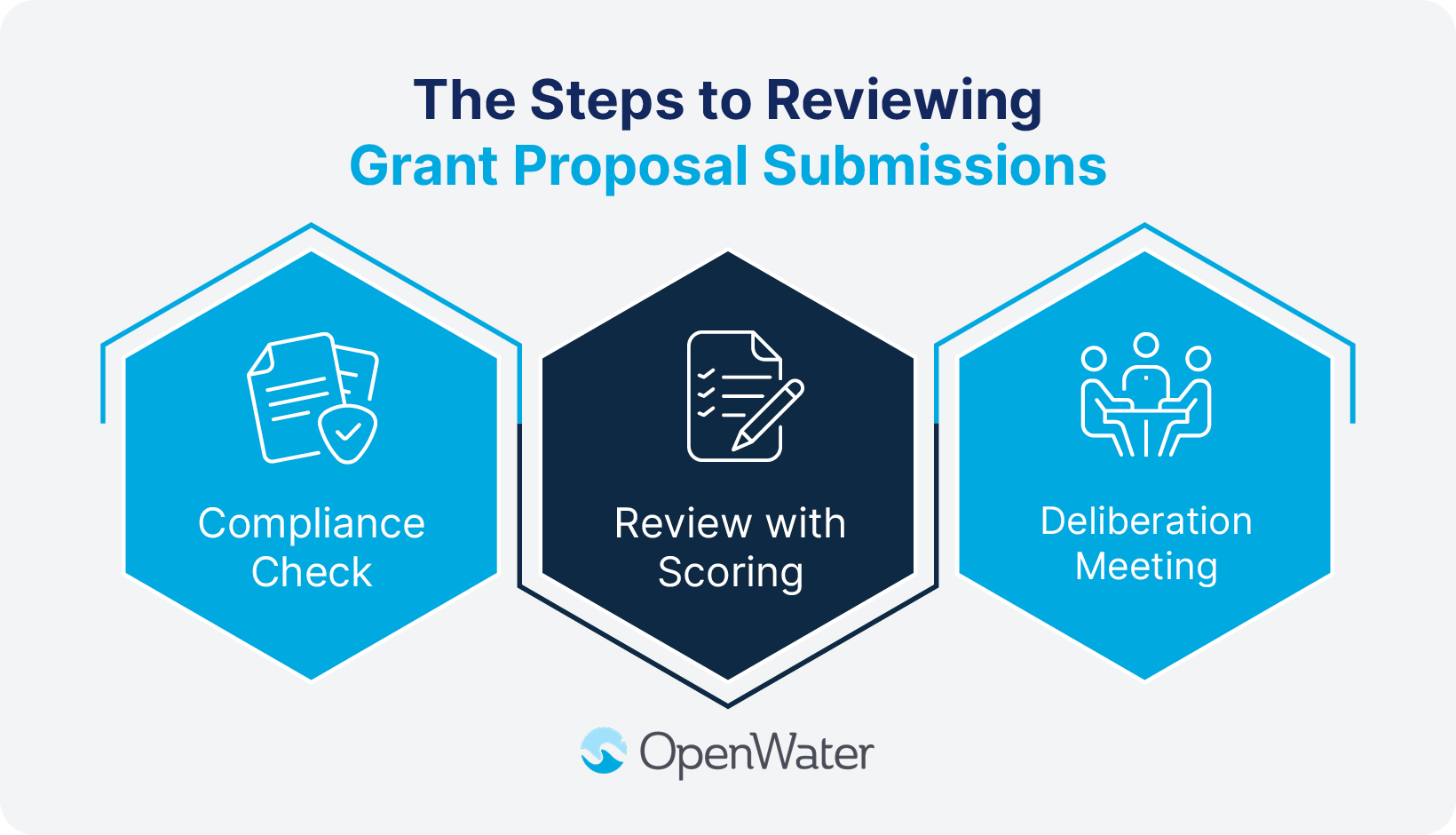
It’s important to standardize the review process as much as possible to ensure that deserving proposals don’t fall through the cracks because of differences in review styles. For instance, an individual who habitually rates proposals lower than others may skew your scoring data.
To mitigate this issue, create a rubric that clearly outlines how a proposal should be scored and have multiple judges fill out that rubric for each application. You may also employ score normalization processes or simply look at rankings to ensure fairness across different viewers. Additionally, if any reviewers have a conflict of interest, establish early that they should recuse themselves from scoring that specific application.
After you’ve made your decision, communicate with all of your applicants. Be careful to handle rejections sensitively and empathetically. Send your rejections as soon as the applicant has been eliminated from the pool. Clearly state that you’re unable to fund their proposal, and if possible, tell them why. If you have the bandwidth, you may even allow them to call you for more details about why their application was rejected.
For approvals, keep in mind that this is the start of a partnership. Don’t hesitate to call the primary contact, congratulate them, and begin discussing next steps. You should also send an email outlining their next steps, including signing the contract, when the funding will arrive, and reporting requirements.
Once the contract is signed, your next step is disbursing funds to your grant recipients in a timely manner. This process should also be fully compliant with your grant agreement and any relevant regulatory requirements.
Grant funds are rarely disbursed in a single lump sum. Instead, it’s common to release funds according to a schedule tied to the project’s milestones, or as reimbursement for documented expenses. Because of this, it’s essential to develop an easy way to track where funds are going for accuracy and to generate a clear paper trail in the case of an audit.
The best way to do this is by investing in grant management tools that integrate with your existing AMS or CRM and accounting and payment processing systems. When these systems freely exchange data with one another, your team gains access to a consolidated view of each grant’s status, making it easy to verify reports, identify any red flags, and maintain compliance.
After all funds have been disbursed, review and analyze the progress of funded grants together. This ensures that your grant program creates the desired impact while allowing you to evaluate whether each grant recipient is someone you want to work with again.
The exact way to measure progress will depend on the grant being funded, but generally, you should combine reports from grant recipients with the stored data your organization already has. While assessing these details, ask yourself the following questions:
It’s also a good idea to check in directly with grant recipients by phone or email. Ask them for an update on the project’s progress, discuss what challenges they’re facing, and what they would do differently if they could start over. You can also ask them how you can be more helpful as their funder, beyond the funds you’ve given them, to show them that you’re as committed as they are to the success of their project.
The insights from these conversations will help grant recipients reflect on how they can improve their work on the project while enabling you to streamline your grantmaking program over time.
As you grow your grant program, the grant management process becomes increasingly complex and time-consuming. The solution? Invest in a specialized tool that boosts efficiency.
Ideally, your grant management software should offer:
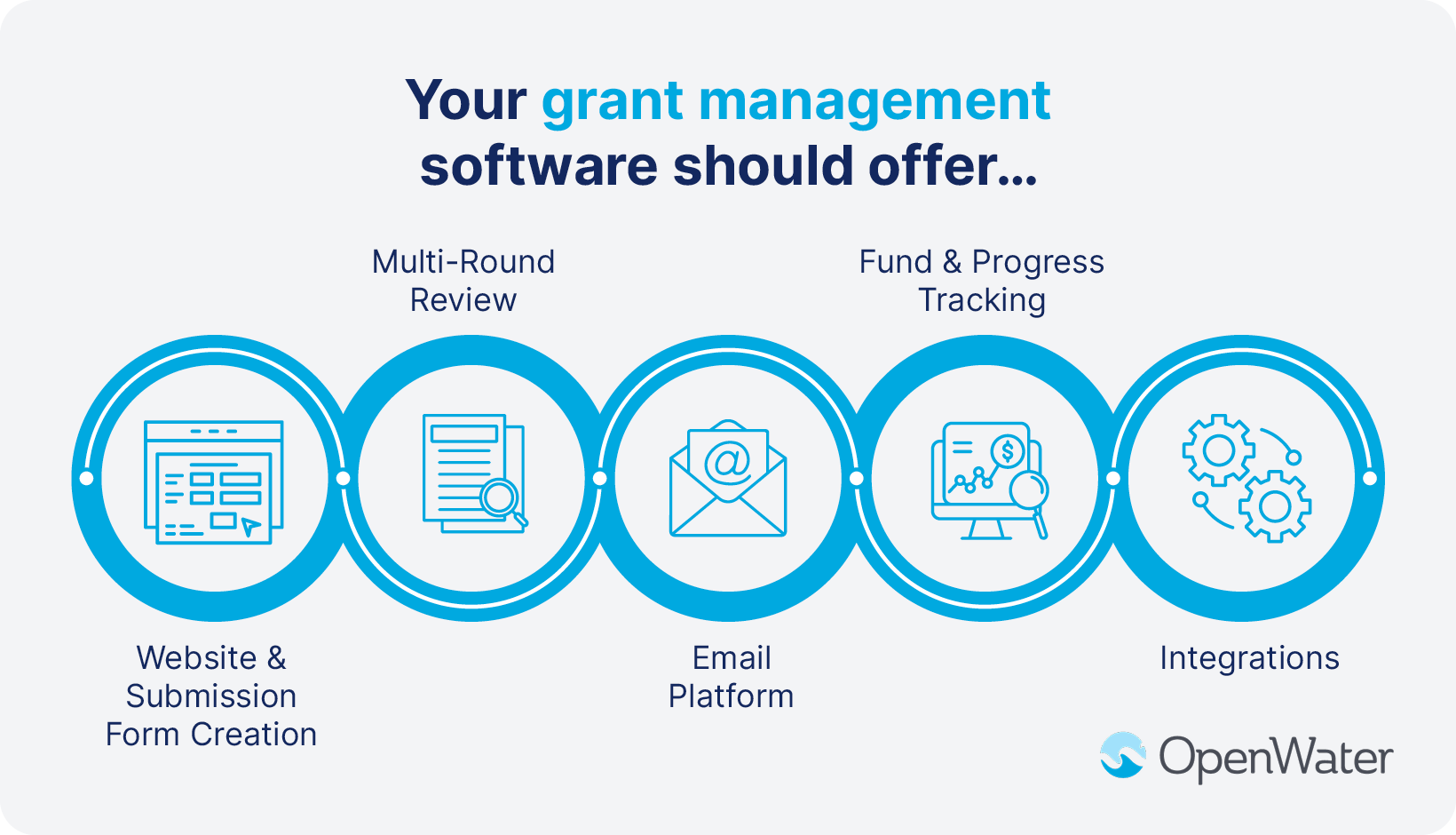
As a grantmaker, you need the right tool to manage your funding opportunities from start to finish and create your desired impact. OpenWater offers grant management software that includes all of the features above and more, simplifying the process for all kinds of grantmakers. Access a unified, robust platform that saves you time, money, and stress, no matter whether you’re new to grantmaking or an experienced funder.
OpenWater allows you to centralize all of your organization's application and review processes—not just for grants, but also for awards, abstracts, scholarships, and fellowships. More than 750 associations, foundations, and higher education institutions have benefited from OpenWater's comprehensive features. Check out our case studies to learn more!
With a streamlined grant management process, your organization shows grantees that you take their missions seriously and that you’re dedicated to making a positive impact by funding their projects. Take the time to audit your current grant management workflows and bolster them to make the process easier for staff members and applicants alike, whether that’s by adjusting your application forms or investing in grant management software.
Want to learn more about application management? Explore the following resources: