Abstract Software
Session Builder and Scheduling


.svg)





For many associations and higher education institutions, conferences are the focal points of their annual event calendars. These gatherings empower passionate, like-minded individuals to spread knowledge and forge connections. However, ensuring large events go off without a hitch requires significant, hands-on effort before, during, and after the conference.
Although conference management may seem daunting at first, developing an effective process is worth the positive impact on the attendee experience (and on your team’s stress levels!). In this guide, we’ll cover the basics of managing conferences for associations and higher ed, including:
Let’s begin by diving deeper into what conference management is and why it matters.
Conference management encompasses all aspects of planning, executing, and evaluating large-scale, formal gatherings of association members or higher education communities. The ultimate goal of conference management is to facilitate an environment where attendees can learn, network, interact with vendors, and generally have a memorable experience with your organization.
Associations typically use conferences as a member engagement tactic, while higher ed conferences may attract a mixed audience of faculty and students at different levels who want to further their knowledge in a specific area of study. So, although many high-level aspects of conference management look similar for these two categories of organizations, their different objectives shape the smaller steps teams take along the way.
By optimizing its conference management process, your organization can experience the following benefits:
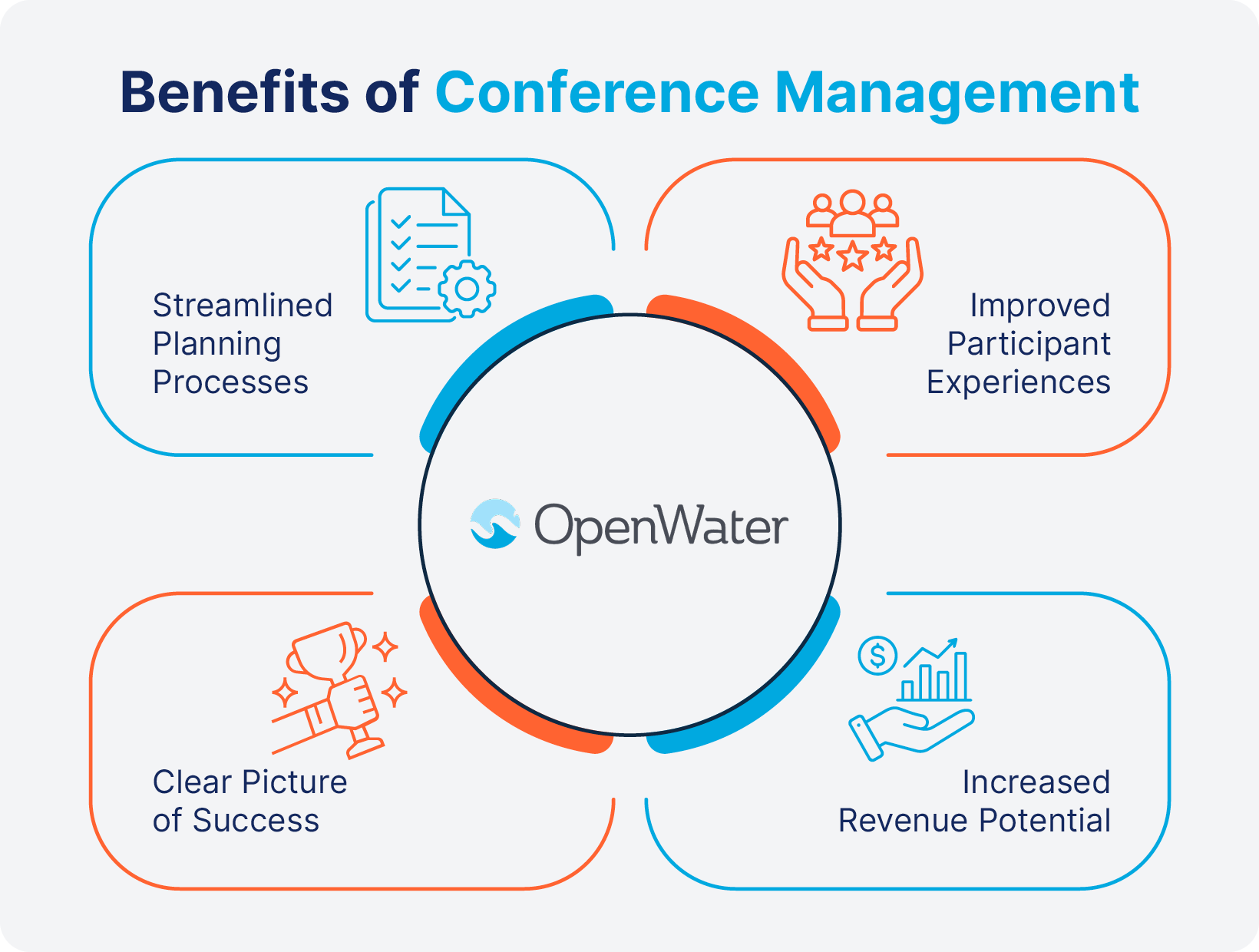
Evaluating your conference’s success also helps you improve your process in the future and experience the benefits of effective management even more strongly at your organization.
Most organizations designate one team member as their primary conference manager at the beginning of the planning process. The conference manager typically leads a team of event planners through preparing for, executing, and evaluating a conference. They also serve as the point person for questions and delegate responsibilities as needed.
Your conference manager and event staff also need to collaborate with your organization’s marketing team to promote the event effectively and your volunteer coordinator to ensure all volunteer roles (check-in, packet creation, abstract review, etc.) are filled by the right people.
Like many modern administrative processes at associations and higher ed institutions, conference management is significantly easier when you have the right software on your side. Make sure your organization has the following platforms in its tech stack before you begin:
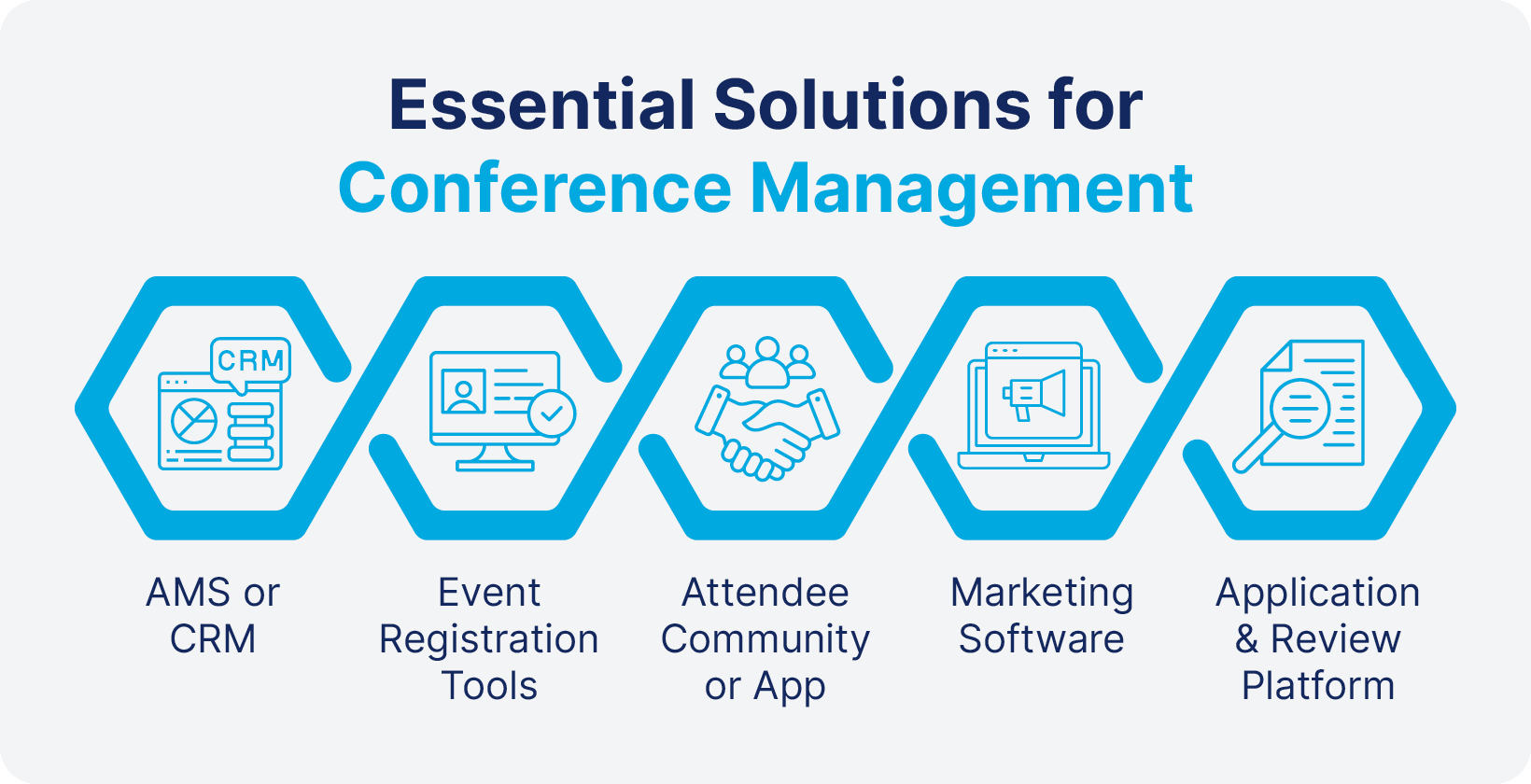
By leveraging these tools together and integrating them whenever possible, your team can overcome many of the common pain points associated with managing conferences and achieve your goals for these events.
Now that we’ve covered the basics of conference management, let’s walk through the hands-on steps your association or higher ed institution will take as you get started with this process. Keep in mind that some of these steps may overlap, and you should generally adapt the process to your organization’s needs as you go.
When you first confirm that your organization wants to host a conference, you’ll have several decisions to make right away. Some logistical considerations you’ll need to confirm include:
Goals are arguably the most important factor to consider at this stage, since they’ll guide your team’s entire process from start to finish. Once you have a general idea of what you want to achieve with your conference, use the SMART framework, which stands for Specific, Measurable, Attainable, Relevant, and Time-bound, to make your goals actionable.
After figuring out the basics, you’ll probably select a theme for your conference to focus it on a particular topic that’s relevant to your field and attendees’ interests. That way, you can build a cohesive schedule that features:
Filling in the educational portions of your conference schedule is where abstract management comes in. Make sure to clearly explain your event theme and acceptable presentation types in your call for abstracts, select judges who are knowledgeable about the topics that abstracts are likely to cover, and communicate decisions and speaker registration processes in a timely manner.

One of the most helpful features to look for in an abstract management platform is the ability to transfer approved abstracts directly to a schedule-building tool. This way, you can group related presentations together while making sure not to double-book sessions that the same audience would like to attend.
For example, let’s say you’re planning a day-long undergraduate research conference for a university that includes poster presentations and short lectures. You split the poster presentations into two sessions—one for students in pre-professional programs and one for majors in the liberal arts and sciences—so that presenters’ professors and classmates can see all of the poster presentations from their department in one place. However, you’d want to avoid scheduling a block of lectures by English majors during the arts and sciences poster presentations, since the same faculty and students will likely want to attend both sessions.
Once you’ve built your conference schedule, create two supplementary documents from it. The first should be a polished, public-facing agenda that attendees can use to plan their days and navigate the event. The second should be a run of show, which provides more detailed information about event production for event team members and volunteers (e.g., a minute-by-minute rundown of activities and the sequence of audio/visual cues that will occur during each session).
Marketing your conference early and often is essential for maximizing attendance. As soon as you finalize the basic details, start promoting your conference across multiple channels, such as:
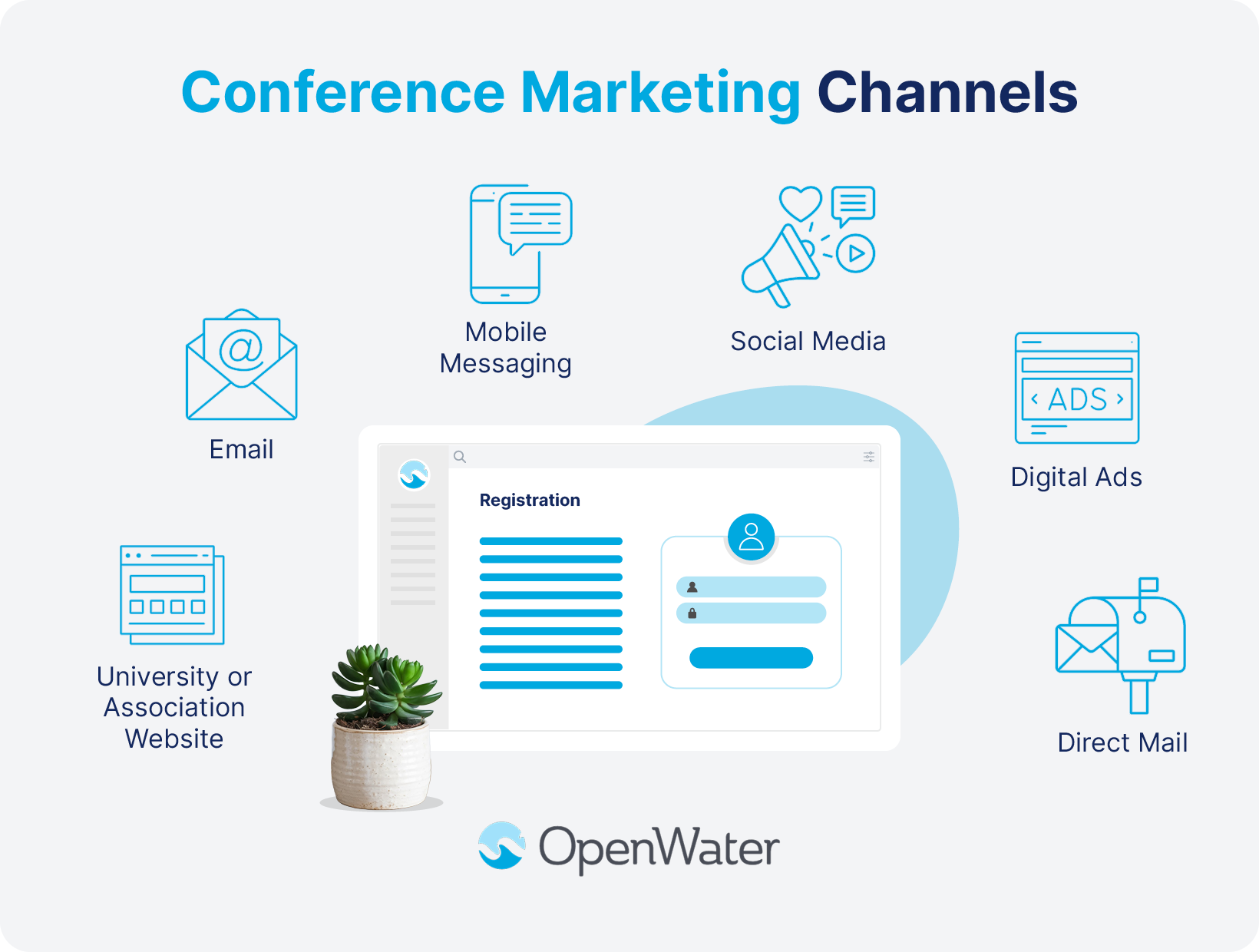
Keep your organization’s visual branding and messaging consistent across all channels to make your messages appear trustworthy to potential attendees. If you promised your event sponsors free publicity in exchange for fiscal support, double-check your agreements to ensure you promote each sponsor appropriately in your event marketing materials.
Link to your registration form in every marketing message to make it easy for interested attendees to sign up while your conference is top of mind. Once you publish your agenda, start linking to it in marketing messages as well, and follow up with registered participants so they can browse the schedule and get excited to attend. These channels are also helpful for promoting your call for abstracts to a broad audience of potential speakers, where you should link to your submission form to prompt them to take the next step.
Conference management doesn’t end when your event does. Within 48 hours of your closing session, send segmented follow-up messages thanking everyone who contributed to your conference’s success, including:
Additionally, you should analyze data on every aspect of your process at this point to determine what went well and what you can improve going forward. Here are some metrics you could track for different areas of your conference:
While you don’t have to track every single one of these metrics for all of your conferences, make sure to analyze the ones that relate closely to your goals so you can tell whether your event was successful and what factors contributed most to (or prevented you from) achieving what you set out to accomplish.
Although abstract management is just one part of conference management, and an abstract management platform is just one piece of a complete conference tech stack, getting this complex step right can make or break your event’s success. Enter OpenWater, a user-friendly, comprehensive application and review platform that supports every element of abstract management with features like:
If you need to manage awards as you plan your conference, OpenWater is equipped for that process, too! In addition to repurposing the platform’s foundational application, review, communication, and analytics features for awards management, your team can build an online gallery to showcase award winners’ achievements to attendees and non-attendees alike with no coding required.
More than 750 associations, foundations, and higher education institutions trust OpenWater to help them navigate application and review processes during conference planning and beyond. But don’t just take our word for it—check out our client success stories to see the real results OpenWater has produced for organizations like yours!

Conference management may seem overwhelming at first, but with the right strategies and technology on your side, you’ll be able to plan an event that’s both educational and memorable for your association’s members or university community. In addition to using post-event data to inform future conferences, stay on top of trends in your field and in conference technology so you can remain contemporary in your event offerings and management practices.
For more information on different aspects of conference management, check out these resources: