Abstract Software
Session Builder and Scheduling


.svg)





When your association, foundation, or higher education institution first launched an abstract, award, grant, scholarship, or fellowship program, you probably relied on spreadsheets and other disparate tools to manage these processes. However, application management is most effective when data storage and workflows remain unified across all processes, which is where an end-to-end platform comes in.
In this guide, you’ll learn everything you need to know to choose the right application management software for your administrative needs. We’ll cover:
Before we dive into the purchasing process, let’s review the basics of application management platforms.
Application management software is a technology infrastructure designed for streamlining the administration of abstracts, awards, grants, scholarships, and fellowships. It keeps data storage and multi-round workflows unified throughout every process for associations, foundations, and higher education institutions.
Application management is the administrative process of overseeing candidate selections for all application and review processes, from initial submission through evaluation and final reporting. It requires coordinating applicants, reviewers, and program administrators to create a seamless operational flow—a goal that dedicated software is particularly helpful for reaching.
The benefits of application management software are plentiful, but some of the most important reasons to leverage it include:
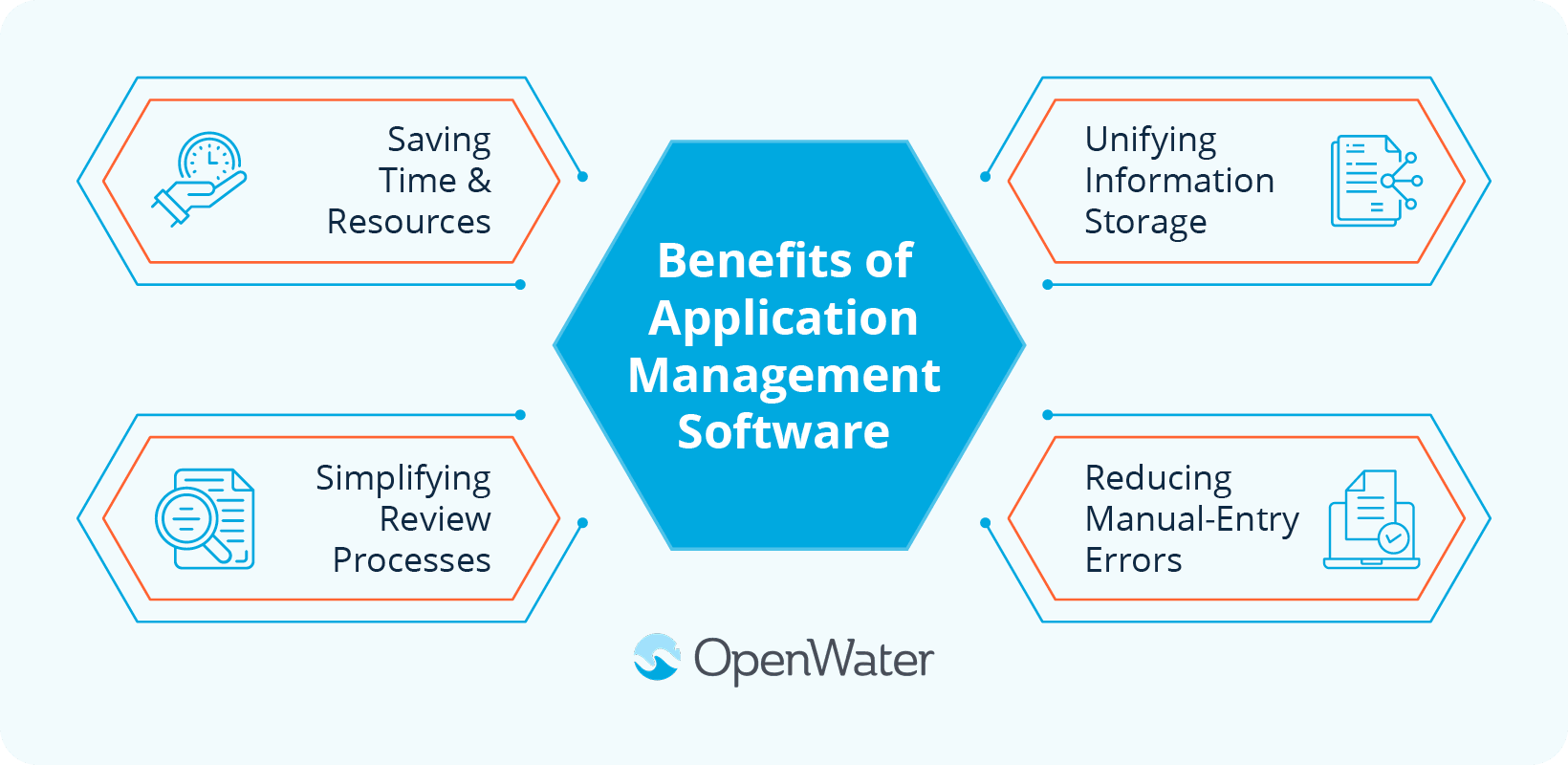
Of course, your organization will see these advantages most clearly if you choose the right platform for your needs and work with your vendor and team to incorporate it effectively into your workflows.

Pricing for application management solutions varies depending on how many programs you run, the volume of submissions you process, and your organization's specific technical requirements. As with many types of software, some organizations use a tiered pricing structure where higher subscription costs unlock access to additional features, while others (including OpenWater) provide custom quotes for each customer.
When evaluating costs, factor in the return on investment (ROI) you’ll gain by streamlining workflows. Look for pricing options that can scale alongside your program's growth, and remember that you often get what you pay for with free or budget solutions.
Choosing the right application management software involves evaluating your unique program requirements, defining clear goals, and identifying a platform that effectively unifies your processes. To make your buying decision easier, here are six steps to follow as you consider the solutions on the market and how they can work for your organization.
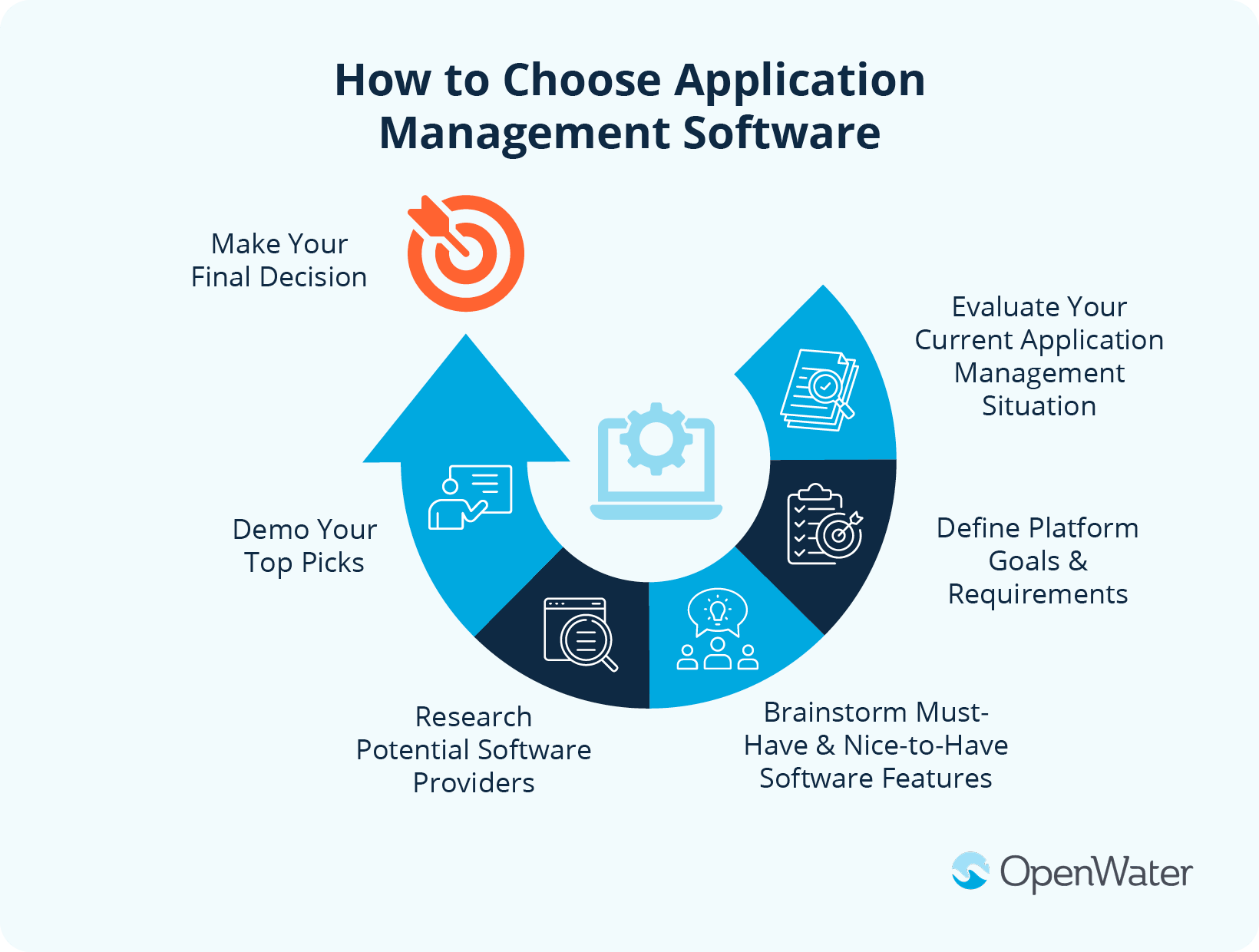
Before you can determine how to improve your processes with software, you first need to know where you currently stand. A SWOT analysis is a useful tool for conducting this type of analysis of your application and review approach, since it helps you figure out your programs’:
If you’re ready to start on your SWOT analysis, use the interactive template below to brainstorm ideas!
Like most of the initiatives your organization undertakes, successful application software implementations always begin with clear goals. Use what you learned during your SWOT analysis to articulate SMART goals (i.e., objectives that are specific, measurable, attainable, relevant, and time-bound) to guide your decision-making.
Returning to the submission form abandonment rate example, a SMART goal might be to lower this metric by 20% within the first six months of implementing your new solution. If you know this target, you can prioritize solutions with highly customizable submission form builders and read case studies or ask vendors questions to see if other organizations have used those systems to hit similar targets.
Take time at this stage to document your technical requirements for an application management platform as well. Your platform needs to comfortably handle all of the programs you run, accommodate the exact review process (number of stages, automated routing, etc.) you want to implement, and integrate with key solutions you already use, such as your association management system (AMS) or constituent relationship management software (CRM).
With your goals and technical requirements established, compile a definitive list of capabilities that your organization needs to look for in its buying process. Besides the aforementioned software integrations, these features may include:
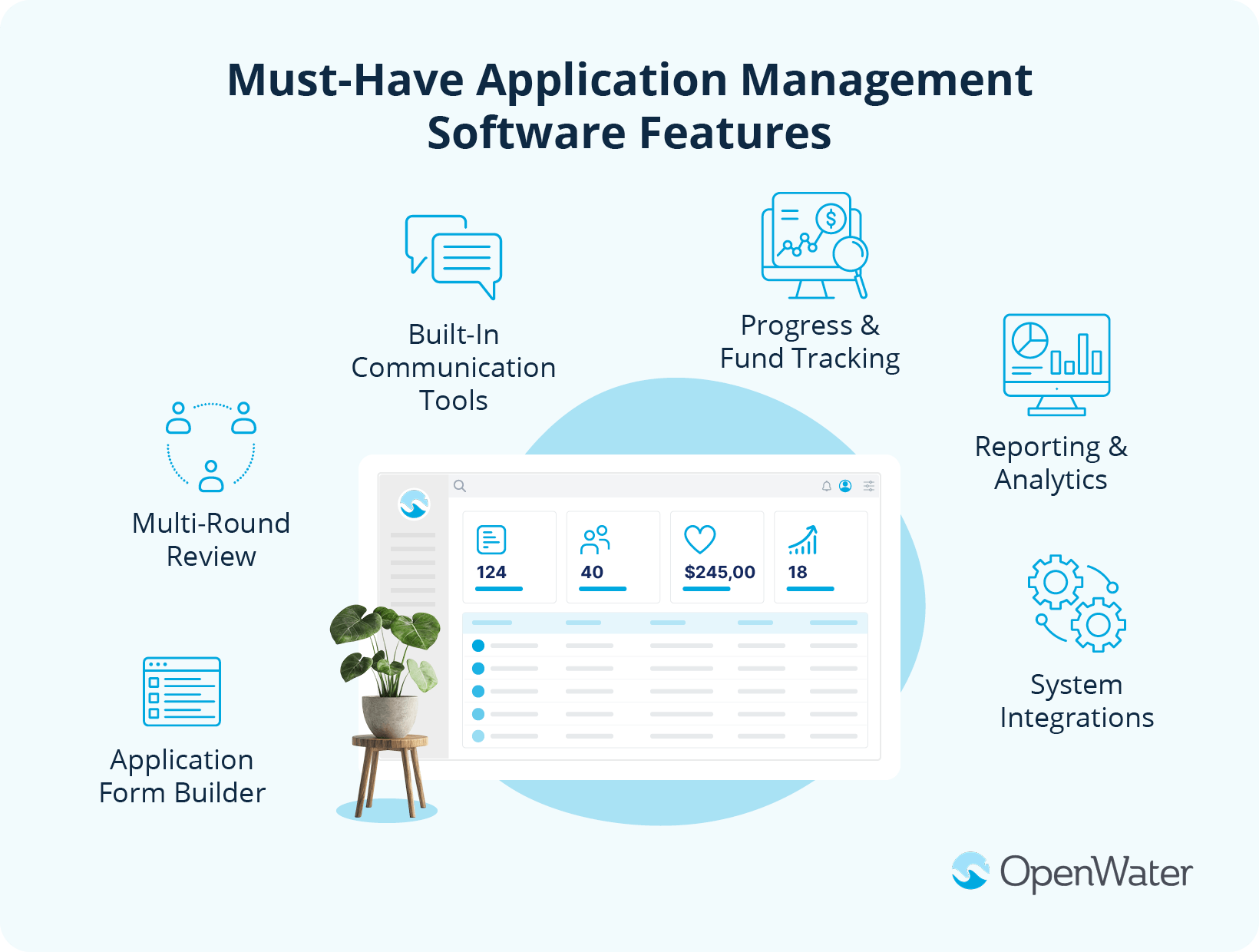
In addition to these must-haves, make a list of nice-to-have features that may not be your top priorities to look for, but their availability could help you choose between two otherwise similar platforms. These capabilities might include program landing page builders, online galleries for recognizing award winners, conference scheduling based on approved abstracts, or AI-powered review assistance.
At this point, you’re ready to start your software search! Browse various vendors’ websites and compilations of the best tools for specific application management functions, and read customer testimonials both on individual solutions’ sites and on third-party review platforms like G2 or Capterra to get a full sense of how each system works.
Besides making sure each solution you consider provides all of your must-have features and at least some of your nice-to-haves during your research, investigate various platforms’:
You might not fully understand all of these factors until the next phase of your buying journey, especially if vendors provide custom quotes. But having a general understanding of them can help you decide which platforms are worth demoing.
After completing your research, choose your three to five favorite platforms to schedule demos for. There are a few ways you can go about this, including:
Pay close attention to both the administrative backend and the applicant-facing interface of each solution you test, and take notes during demos for future reference. You might even create a rubric to rate each platform based on its different capabilities so you can directly compare your options and consider your priorities at a granular level (e.g., if two solutions got the same total score, would you lean toward the one that scored higher on affordability and lower on customer support or vice versa?).
Finally, you’ll pick the platform that most effectively meets all of your requirements! Remember to read your provider’s contract carefully before signing it to ensure you understand the terms in case “small details” (e.g., warranties or opt-out clauses) become relevant later.
From there, you’ll just need to complete the setup, migrate your existing program data into your new system, and train your team to use the software.
OpenWater is an end-to-end application and review platform built for associations, foundations, and higher ed. Designed to help you leave spreadsheets and disjointed individual tools in the past, OpenWater keeps data storage and workflows unified throughout every step of your abstract, award, grant, scholarship, and fellowship management processes.
Whether you leverage one, a few, or all five functionalities, you’ll get the same user experience and customization capabilities across the board. Other benefits of OpenWater’s platform include:
No matter your application and review needs, we’ll help you navigate. But don’t just take our word for it—check out our case studies to see how real organizations like yours have benefited from OpenWater!

Upgrading your application and review systems takes time and effort, but the ROI and improved experiences your association, foundation, or higher ed institution will see from doing so make the buying process worthwhile. Use the steps above to get started, and make sure to keep OpenWater on your list as you research all-in-one application management software providers!
For more information on application management, check out these resources: